
When most people think about bioidentical hormone replacement therapy treatments, estrogen, progesterone, and testosterone come to mind immediately. These are the hormones that get the headlines, the ones people associate with energy, libido, and overall vitality. DHEA, meanwhile, operates in the background, rarely discussed despite playing a foundational role in how your body produces these more familiar hormones.
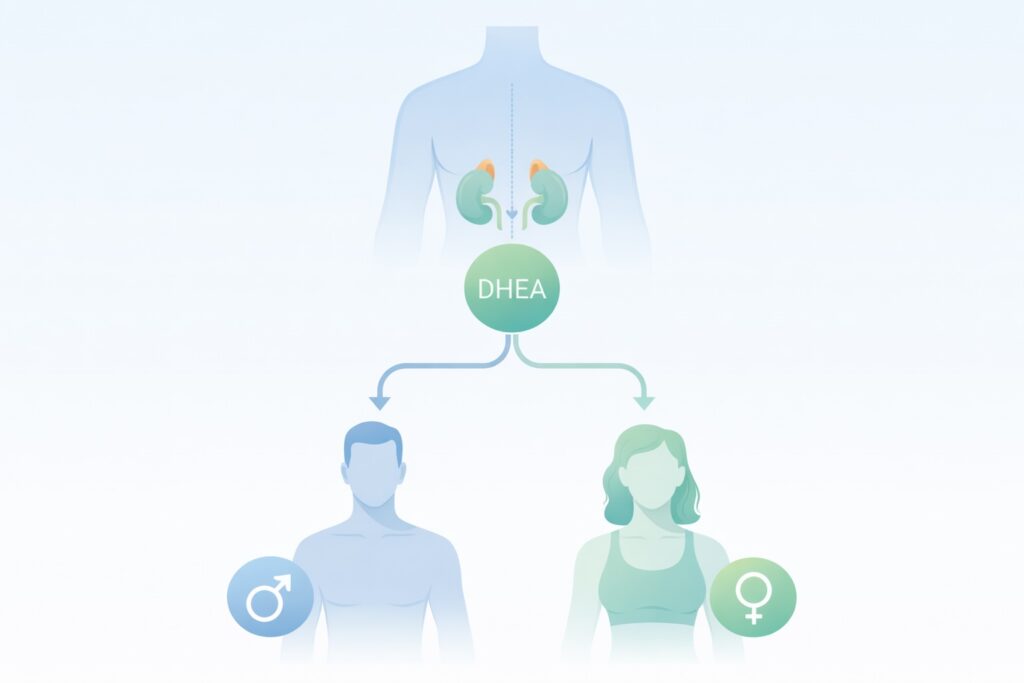
Here’s what makes DHEA different: it’s a precursor hormone. Your adrenal glands produce it, and your body then converts it into other hormones as needed, including testosterone and estrogen. Think of it as the raw material your body uses to manufacture the hormones that directly influence how you feel, function, and age.
The problem is that DHEA production peaks in your mid-twenties and declines steadily from there. By age 70, your levels may be only 10-20% of what they were at their peak. This gradual decline affects your body’s ability to maintain optimal levels of the hormones DHEA helps produce. Yet despite this critical role, DHEA supplementation remains underutilized and poorly understood, even among people actively pursuing hormone optimization.
Why DHEA Works Differently
Taking DHEA isn’t like taking testosterone or estrogen directly. When you supplement with those hormones, you’re adding a specific hormone to your system. DHEA gives your body building blocks it can convert into whatever hormones it needs most. This flexibility makes DHEA particularly valuable for people whose bodies can still produce hormones effectively but lack sufficient raw materials.
Your adrenal glands sit atop your kidneys and function as hormone factories. They produce DHEA in response to signals from your pituitary gland. That DHEA then travels through your bloodstream to various tissues, where enzymes convert it into testosterone, estrogen, or other hormones based on what each tissue needs at that moment.
When DHEA levels drop with age, multiple systems feel the impact simultaneously. Men may experience low testosterone symptoms even when direct testosterone supplementation doesn’t completely resolve them. Women dealing with menopause face declining DHEA on top of reduced ovarian hormone production, creating a compounded effect on estrogen and testosterone availability.
Beyond serving as a hormone precursor, DHEA has its own direct effects. It influences immune function, helps regulate inflammation, affects how your body responds to insulin, and plays a role in maintaining bone density. This means DHEA deficiency creates problems that extend beyond just lower levels of other hormones.
The Brain Connection
DHEA’s effects on the brain go beyond simple hormone conversion. Some research suggests associations between DHEA levels and cognitive function, though findings remain inconsistent. What’s clearer is DHEA’s influence on neurotransmitters like serotonin and GABA, both critical for mood regulation. It also appears to have neuroprotective properties, helping shield neurons from oxidative stress and inflammation.
The mood connection shows up consistently in research. Multiple studies have found lower DHEA levels in people with major depression compared to those without depression. Whether low DHEA contributes to depression or depression somehow affects DHEA production remains unclear, but supplementation studies suggest that restoring DHEA levels may help improve mood in some individuals, particularly those with demonstrated deficiency.
The relationship between DHEA and stress deserves attention. Chronic stress taxes your adrenal glands, potentially affecting their ability to produce adequate DHEA. This creates a problematic cycle: stress depletes DHEA, and low DHEA makes you less resilient to stress. Supporting DHEA levels through supplementation may help break this cycle, though managing stress through other means remains equally important.
Physical Effects You Can Measure
Research in older adults shows the most consistent physical benefits from DHEA supplementation. Studies examining DHEA in men and women over 60 often find improvements in muscle strength, bone density, and body composition. These effects likely occur because older adults typically have more significant DHEA deficiencies, giving supplementation more room to make a meaningful difference.
DHEA appears to influence how your body handles fat, particularly visceral fat. This is the metabolically active fat that accumulates around organs and contributes to various health problems. The mechanisms involve DHEA’s effects on insulin sensitivity and inflammation, both of which influence how your body stores and burns fat.
Bone health represents another area where DHEA shows promise. Bone tissue contains enzymes that convert DHEA into estrogen and testosterone, both crucial for maintaining bone density. Studies in postmenopausal women show that DHEA supplementation can help maintain or even improve bone mineral density, making it particularly relevant for aging individuals concerned about osteoporosis.
Who Actually Benefits from DHEA
Not everyone needs DHEA supplementation. Testing provides the most straightforward way to identify whether you have a deficiency worth addressing. People under 40 with normal adrenal function typically have adequate DHEA levels and likely won’t benefit from supplementation. After 50, DHEA levels decline more noticeably, and supplementation becomes more likely to provide benefits if testing reveals deficiency.
Women going through menopause or already postmenopausal often benefit from DHEA supplementation. The decline in ovarian hormone production during menopause coincides with already-declining DHEA levels. This creates a double reduction in the body’s ability to produce estrogen and testosterone, which DHEA can help address.
Men with low testosterone who haven’t found complete symptom relief from testosterone replacement alone might benefit from adding DHEA. Sometimes the issue isn’t just testosterone levels but the broader hormonal picture. DHEA’s conversion into multiple hormones and its direct effects on metabolism, mood, and energy might address symptoms that testosterone replacement doesn’t fully resolve.
People dealing with chronic stress may find DHEA supplementation helpful. Chronic stress activates your adrenal glands repeatedly, potentially depleting DHEA reserves over time. Supporting DHEA levels may help maintain resilience and prevent some of the negative health effects associated with prolonged stress.
How DHEA Supplementation Works in Practice
DHEA comes in oral form, typically as capsules. Common starting doses range from 25-50 mg daily, though individual needs vary based on age, sex, and testing results. Men typically tolerate and may require higher doses than women.
Unlike bioidentical hormone pellets that release hormones steadily over months, oral DHEA creates a peak-and-trough pattern. Levels rise within hours of taking a dose, then decline over the next 24 hours. This means daily supplementation is necessary to maintain stable levels. Some people actually prefer this because it gives them control; if they experience side effects, they can simply stop taking it.
Side effects can occur, particularly when doses are too high. Women may experience androgenic effects including acne, oily skin, or facial hair growth. These typically indicate the dose needs adjustment. Men might experience effects related to estrogen conversion, such as breast tenderness or water retention. Again, these side effects usually resolve with dose modification.
People with hormone-sensitive conditions need medical guidance before using DHEA, since it converts into estrogen and testosterone. This includes anyone with a history of breast cancer, prostate issues, or endometriosis.
Testing Makes the Difference
DHEA-sulfate (DHEA-S) testing provides the best indicator of overall DHEA status. It’s more stable in the bloodstream than DHEA itself, making it easier to measure accurately. Optimal levels typically fall in the upper half of the normal range for your age and sex. A level at the low end of normal might still represent a meaningful deficiency if you’re experiencing related symptoms.
Establishing baseline levels before starting supplementation provides a reference point for future comparison. Retesting roughly 4-6 weeks after starting helps determine whether the dose is appropriate. Follow-up testing should include not just DHEA-S but also testosterone and estrogen levels to ensure supplementation is creating the desired effects without causing imbalances.
This testing approach matters because everyone’s body converts DHEA differently. Some people efficiently convert it into the hormones they need most. Others convert it less effectively, requiring dose adjustments or potentially different approaches altogether.
DHEA and Bioidentical Hormone Therapy
Many people using bioidentical hormone replacement therapy find that adding DHEA enhances their overall results. The pellets used in BHRT often include DHEA alongside testosterone, estrogen, or progesterone. This recognizes that supporting multiple aspects of the hormonal system typically works better than focusing on any single hormone.
The combination approach makes physiological sense. If your body struggles to produce adequate amounts of multiple hormones, replacing them all may prove more effective than trying to replace just one and hoping your body will produce the others. DHEA supplementation provides flexibility in this regard; it can be adjusted separately from pellet therapy, allowing fine-tuning of your overall hormone optimization strategy.
Some practitioners prefer starting with DHEA supplementation before adding other hormones, particularly in younger patients or those with milder symptoms. This approach provides the body with raw materials to produce its own hormones, potentially requiring less direct hormone replacement. For older adults or those with more severe deficiencies, combining DHEA with direct hormone replacement from the start may be more appropriate.
The Bigger Picture Matters
DHEA supplementation works best as part of a comprehensive approach to health rather than as an isolated intervention. Sleep quality affects hormone production across multiple systems. Poor sleep can impair DHEA production just as it affects growth hormone and testosterone. Addressing sleep problems may help optimize natural DHEA production, potentially reducing the need for supplementation or enhancing its effectiveness when used.
Nutritional status affects hormone production and metabolism. Deficiencies in certain vitamins and minerals can impair the enzymes that convert DHEA into other hormones or affect hormone receptor function. Ensuring adequate intake of nutrients like vitamin D, zinc, magnesium, and B vitamins supports the body’s ability to utilize DHEA effectively.
Stress management can’t be overlooked when discussing adrenal hormones. Your adrenal glands produce both DHEA and cortisol, and chronic stress taxes these glands. While DHEA supplementation can help, reducing the stress burden through lifestyle changes, therapy, or stress-reduction practices addresses the problem at its source rather than just supporting the consequences.
Making an Informed Decision
The decision to use DHEA should involve testing, symptom assessment, and consideration of your overall health picture. Starting with testing establishes whether you actually have a deficiency worth addressing. Many people assume their hormones are imbalanced without confirming through testing, leading to supplementation that may not be necessary or appropriate.
Working with knowledgeable healthcare providers makes a significant difference in outcomes. While DHEA is available over the counter, using it effectively requires understanding hormone interactions, appropriate dosing, and proper monitoring. Providers experienced in hormone optimization can help navigate these complexities and adjust your protocol based on your response.
Set realistic expectations. DHEA isn’t a miracle supplement that will reverse all effects of aging or solve every health problem. What it can do is support your body’s hormone production systems, potentially improving energy, mood, body composition, and overall resilience when deficiency exists. These improvements often manifest gradually rather than dramatically.
The Forgotten Hormone Worth Remembering
DHEA may not get the attention that estrogen, testosterone, or progesterone receive, but its role in maintaining health and vitality as you age shouldn’t be overlooked. Whether used alone or as part of comprehensive bioidentical hormone therapy, DHEA supplementation offers a tool for supporting your body’s hormone production systems and maintaining function across multiple physiological domains.
The key is using it thoughtfully, based on testing and monitoring, as part of a broader commitment to healthy aging. For those interested in exploring whether DHEA supplementation might be appropriate, contact our Pompano Beach wellness clinic to discuss testing options and personalized hormone optimization strategies.