
Ketamine-assisted therapy offers a clinically supervised treatment option for adults living with major depression who have not found sufficient relief from conventional antidepressant medications. At Ketamine & Wellness Clinic of South Florida in Pompano Beach, patients have access to advanced care options, including IV ketamine infusions, FDA-approved Spravato (esketamine), and FDA-cleared NeuroStar transcranial magnetic stimulation (TMS).
Key Takeaways
- Ketamine-based treatments may provide relatively rapid improvement in depressive symptoms for selected patients, but individual responses vary.
- IV ketamine and Spravato are different treatments. Spravato is an FDA-approved esketamine nasal spray for specific indications, while psychiatric use of IV ketamine is generally off-label.
- NeuroStar TMS is a separate, non-invasive, FDA-cleared treatment for specific conditions, including major depressive disorder (MDD) and obsessive-compulsive disorder (OCD).
How Does Ketamine-Assisted Therapy Work for Depression?
This approach uses ketamine as part of a supervised treatment plan to help eligible patients manage certain mental health conditions. Ketamine affects glutamate signaling in the brain, including pathways linked to the N-methyl-D-aspartate (NMDA) receptor. Researchers believe these effects may change connections between brain cells and help reduce depressive symptoms.
Unlike many standard antidepressants, ketamine may improve symptoms within hours or days for some patients. However, the level of improvement and how long it lasts vary from person to person. Fast symptom relief does not guarantee lasting remission.
The treatment may involve IV ketamine infusions or esketamine nasal spray. These options have different regulatory statuses, treatment protocols, and levels of supporting evidence. They are not interchangeable and require separate clinical considerations.
Before recommending treatment, clinicians review the patient’s diagnosis, symptom severity, medication history, medical conditions, and possible risks or contraindications. The treatment plan should match the patient’s needs and include appropriate follow-up to monitor progress, side effects, and ongoing response.
Who May Benefit From Ketamine-Based Treatment?
Ketamine therapy may be considered for selected patients with significant depression, especially when standard treatments have not provided enough relief. Eligibility depends on the treatment method, clinical diagnosis, previous treatment attempts, and overall health.

In a 2025 clinical safety study evaluating low-dose ketamine infusions published in Pain Physician and indexed on PubMed:
“The cumulative incidence of nightmares (8.9% vs 0.72%) and hallucinations (6.8% vs 2.2%) were both higher in the LDKI group.” – PubMed (2025).
A psychiatric assessment typically reviews:
- Previous antidepressant medications and response to psychotherapy.
- Current medications, substance-use history, and relevant medical conditions.
- Blood pressure, cardiovascular health, and neurological history.
- A history of mania, psychosis, dissociation, or other conditions that may affect treatment safety.
- Treatment goals, expected benefits, and available alternatives.
Ketamine is not suitable for everyone. Certain cardiovascular conditions, uncontrolled high blood pressure, substance-use concerns, and other mental or physical health factors may require further evaluation. When relevant, clinicians should also review pregnancy or breastfeeding status and possible medication interactions.
Before treatment begins, patients should receive a clear explanation of the potential benefits, limitations, risks, and alternatives. They should have time to ask questions and discuss any concerns with their clinician. No treatment guarantees complete remission, and results vary from person to person.
What Is the Difference Between IV Ketamine and Spravato?
IV ketamine and Spravato contain related compounds, but they differ in formulation, how they are given, and regulatory status. IV ketamine is delivered through an infusion, while Spravato nasal spray treatment contains esketamine and is given under a specific FDA-approved treatment framework.
| Treatment | Administration | Regulatory status | Key considerations |
| IV ketamine | Intravenous infusion under clinical supervision | Psychiatric use is generally off-label | Requires individualized dosing, safety monitoring, and a discussion of evidence limitations |
| Spravato (esketamine) | Supervised nasal spray administration | FDA-approved for specific indications | Requires monitoring under applicable prescribing and safety requirements |
| NeuroStar TMS | Magnetic stimulation using a treatment coil | FDA-cleared for specific indications | Non-invasive and does not involve ketamine administration |
Psychiatric use of IV ketamine is generally off-label, meaning it is used for a purpose that is not specifically approved by the FDA. Clinicians should explain this distinction and discuss the evidence supporting the proposed treatment protocol, along with its potential benefits and risks.
What Are the Risks and Side Effects?
Ketamine and esketamine can cause temporary side effects, so proper screening and monitoring are important. These effects may include dizziness, nausea, dissociation, sedation, changes in perception, and increased blood pressure.
Side effects can vary based on the treatment, dose, medical history, and individual response. Repeated ketamine use also raises concerns about misuse, dependence, and possible urinary or cognitive problems. Regular clinical reviews help identify these risks and address concerns early.
As noted by PubMed:
“The cumulative incidence of nightmares (8.9% vs 0.72%) and hallucinations (6.8% vs 2.2%) were both higher in the LDKI group.” – PubMed
Before treatment, patients should tell their clinician about all prescription medications, over-the-counter products, supplements, and substance use. They should also report any cardiovascular conditions, uncontrolled high blood pressure, urinary symptoms, or history of psychosis, mania, or substance-use disorders.
The FDA’s prescribing information for Spravato lists specific administration and monitoring requirements. These rules apply to Spravato and should not automatically be assumed to match every IV ketamine treatment protocol. Clinicians should explain the safety steps required for the specific treatment being considered.
How Does NeuroStar TMS Differ From Ketamine-Based Treatments?
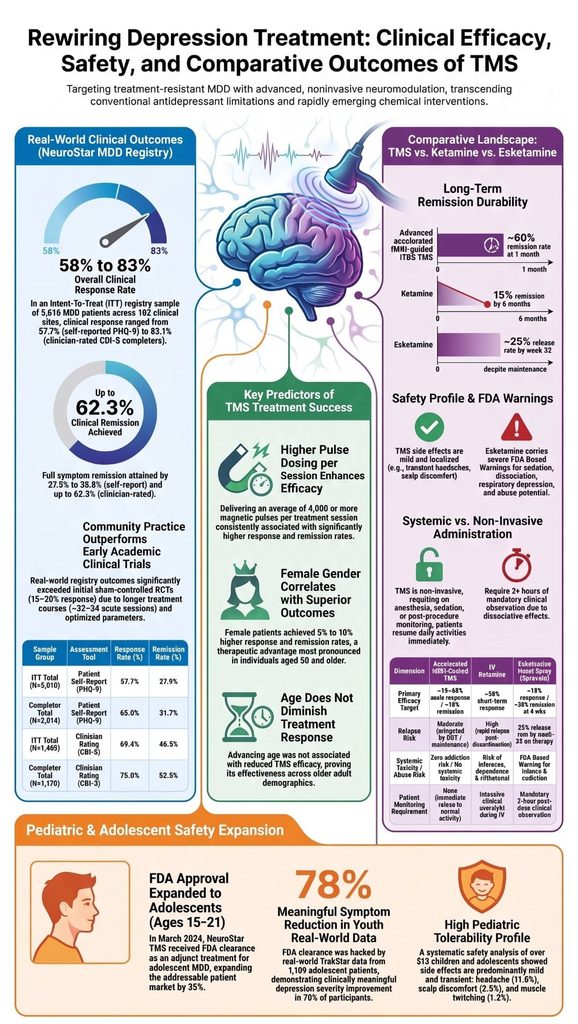
NeuroStar transcranial magnetic stimulation (TMS) is a non-invasive treatment that uses magnetic pulses to stimulate targeted brain regions. Unlike ketamine-based treatments, TMS therapy does not require medication during sessions.
NeuroStar is FDA-cleared for specific uses, including major depressive disorder (MDD), obsessive-compulsive disorder (OCD), and anxious depression within its cleared use. It may help eligible patients whose depression has not improved enough with standard treatment. It is not first-line care for every patient.
Treatment takes place in an outpatient setting while patients remain awake. Session length depends on the protocol and device settings. NeuroStar protocols include sessions as short as 3 or 19 minutes and a standard protocol of about 37.5 minutes. The clinician should confirm the appropriate protocol.
TMS avoids systemic medication effects but may cause scalp discomfort or headaches. Seizures are rare but possible. Certain implants, electronic devices, or a seizure history may require safety review. NeuroStar is not intended for children under 15; clinicians should confirm current adolescent labeling.
NeuroStar registry data report an 83% response rate and 62% remission rate by clinician rating. These figures do not guarantee individual results and are not directly comparable with randomized controlled trials.
What Treatment Options Does Ketamine & Wellness Clinic of South Florida Offer?
Ketamine & Wellness Clinic of South Florida provides psychiatric and wellness services in Pompano Beach, Florida. The clinic is overseen by board-certified psychiatrist Dr. Delvena Thomas and supported by Advanced Certified Nurse Practitioners Sonia Cotto and Khali Reed.
Available services include:
- IV ketamine infusions.
- Spravato (esketamine) treatment.
- NeuroStar Advanced TMS Therapy.
- Medication management.
- IV vitamin therapy.
- Stellate ganglion block (SGB).
Each service has a distinct purpose, evidence base, and safety profile. Clinicians should recommend treatment based on the patient’s condition and clinical needs rather than assuming that every service is appropriate for every psychiatric diagnosis.
Care may include symptom monitoring, medication review, psychotherapy referrals, and follow-up assessments. Treatment progress should be evaluated regularly, with adjustments made according to response, tolerability, and clinical goals.
Contact the clinic to confirm current service availability, accepted insurance, licensure, and whether care is available in your location.
Choosing the Next Step in Depression Treatment
Living with treatment-resistant depression can feel overwhelming, especially when standard antidepressants have failed to provide relief. Deciding whether ketamine-assisted therapy is right for you begins with an in-depth, compassionate medical consultation.
At Ketamine & Wellness Clinic of South Florida in Pompano Beach, Dr. Delvena Thomas and our certified clinical team evaluate your health history to create a personalized treatment plan. Contact Ketamine & Wellness Clinic of South Florida today to schedule your confidential consultation.
FAQs
How Does Ketamine-Assisted Psychotherapy Differ From Traditional Psychotherapy?
Ketamine-assisted psychotherapy (KAP) combines medically supervised ketamine administration with structured psychotherapy. Traditional psychotherapy uses approaches such as cognitive behavioral therapy or trauma therapy without ketamine.
KAP may help some patients explore difficult emotions and thought patterns. A psychiatrist or qualified clinician evaluates the patient’s medical history, mental health symptoms, and treatment goals before recommending this approach.
Who May Benefit From Ketamine Treatment for Treatment-Resistant Depression?
Ketamine treatment may be an option for adults with treatment-resistant depression who have not experienced sufficient improvement with standard treatments. A psychiatric evaluation reviews previous medications, symptom severity, medical history, and potential risks.
Ketamine is not appropriate for every patient, and its effectiveness depends on the condition and treatment method. A clinician can explain the potential benefits, limitations, and alternatives.
What Happens During a Ketamine Session?
A ketamine session may include medical screening, supervised ketamine administration, and monitoring of vital signs and side effects. Some treatment programs also include a preparation session and a follow-up integration session.
Patients may experience dissociation, changes in perception, or temporary confusion. When psychotherapy is included, a qualified therapist helps patients discuss their experiences and relate them to their treatment goals.
Can Ketamine-Assisted Therapy Help With Anxiety or Trauma?
Researchers are studying ketamine treatment for anxiety disorders, post-traumatic stress disorder (PTSD), and other mental health conditions. Some patients may experience short-term improvements in symptoms, but responses vary.
Evidence for these uses remains limited, and ketamine is not a first-line treatment for every condition. A clinician can discuss established treatments, such as trauma-focused psychotherapy, and assess whether ketamine is appropriate.
What Are the Risks and Side Effects of Ketamine Treatment?
Ketamine treatment can cause dizziness, nausea, drowsiness, increased blood pressure, and dissociation. Some patients also experience temporary changes in perception, confusion, or impaired coordination.
Repeated ketamine use may increase the risk of dependence and urinary tract or bladder problems. Medical screening, supervised administration, and follow-up appointments help clinicians manage these risks. Patients should report existing medical conditions and all medications before treatment.